Building the Jewish Future, Together in Jerusalem.
Join Hartman’s Hevruta Gap Year Program for a year in Jerusalem engaging Jewish tradition, encountering Israeli society, and building a pluralistic community of Jewish peers from Israel and North America.
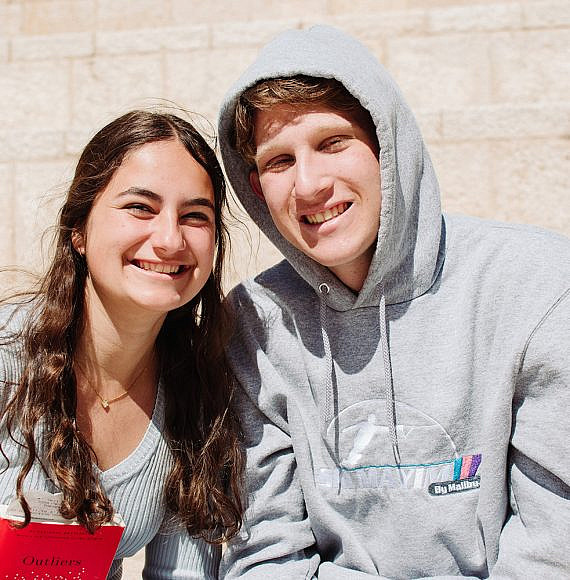
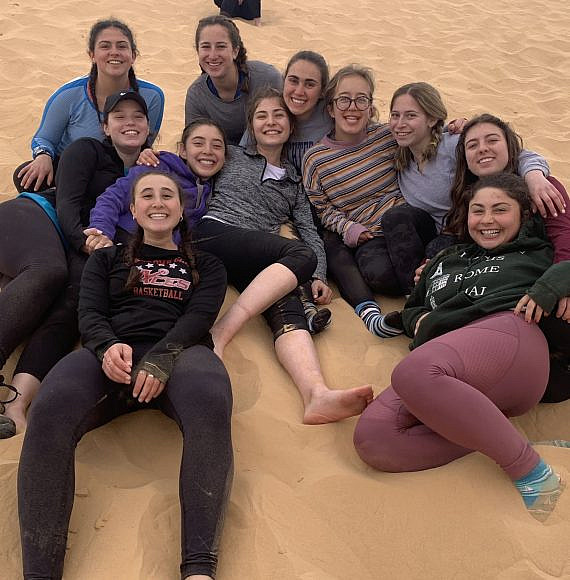
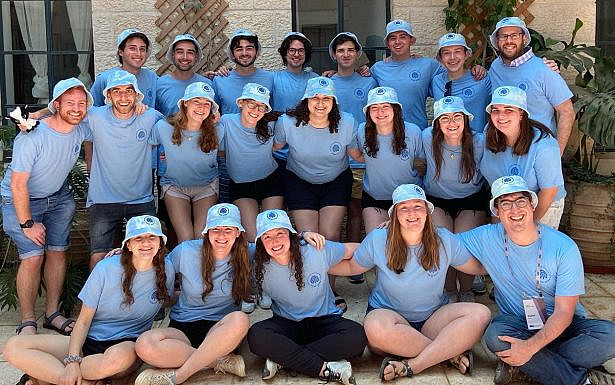
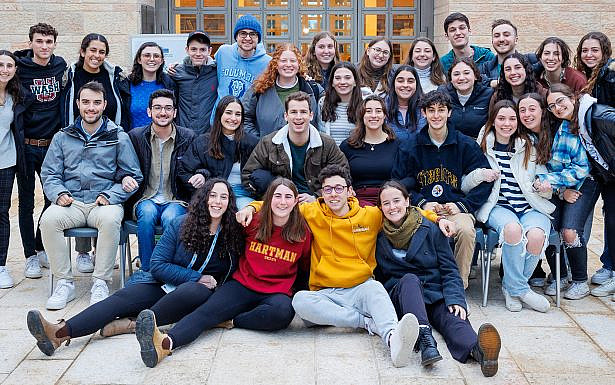
Community. At Hevruta, we pride ourselves on our one of a kind community. We bring together a pluralistic cohort of pre-university Americans and pre-army Israelis who collectively build our community. Throughout the year, we explore the meaning of Jewish peoplehood by sharing and discussing what makes each student’s personal Judaism unique. It’s fitting that we’re called Hevruta: the same partnership at the heart of Jewish learning is what our students build with one another.
Study. At Hevruta, the learning covers the core texts of the Jewish tradition alongside the challenges facing the Jewish people today. Our classes include Talmud and weekly Parsha study, as well as those on current events and the Israeli-Palestinian conflict. Rather than shying away from the topics that challenge the Jewish people, we push our students to dive into the heart of them, all with the guidance of the Hartman Institute’s scholars.
Responsibility. Each student plays an active role in shaping the community we build at Hevruta. Through committees, the students themselves plan the Shabbat experience, the treks, group volunteering, and community ceremonies.
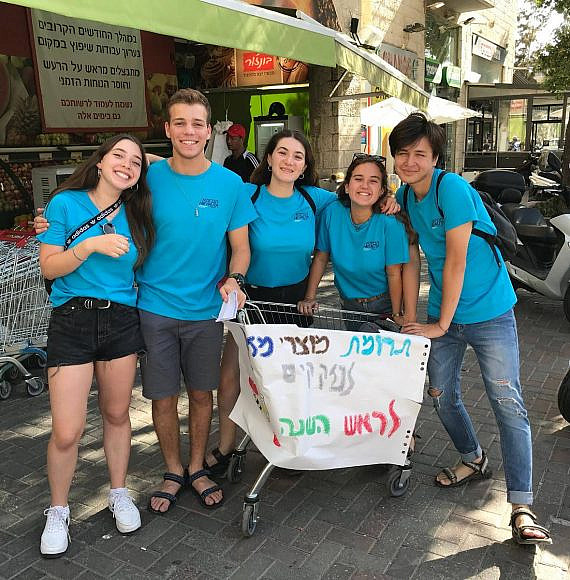
Contribution. Every week Hevruta students spend one afternoon volunteering at communities across Jerusalem and one morning interning at local nonprofits. This is an opportunity for Hevruta students to give back as well as gain experience during their gap year.
Independence. Hevruta aims to teach our students independence. Students manage their own apartments and their own budgets, with madrichim (counselors) who live in the building as guides and mentors through this stage of their lives.
Hevruta runs from September through May. Throughout the year, we cultivate our community with shared Shabbatot, treks, volunteering, and the celebration of religious and national holidays. When Hevruta is not in session, students have the opportunity to explore Israel, especially with their Israeli classmates.
On Hevruta, students move between the beit midrash, the classroom, and the city. Each week one afternoon is dedicated to volunteering and one morning to internships. There is also time devoted to Hevruta committee work, and the evenings are filled with student-driven workshops, cultural programming, and the responsibility of running an apartment. The week closes with Shabbat together. This varied rhythm gives students the chance to develop a personal understanding of Jewish peoplehood and to discover Jerusalem as locals.
The Hevruta curriculum includes:
Some of the most important conversations about the future of Jewish life are happening on two continents at once, and rarely in the same room.
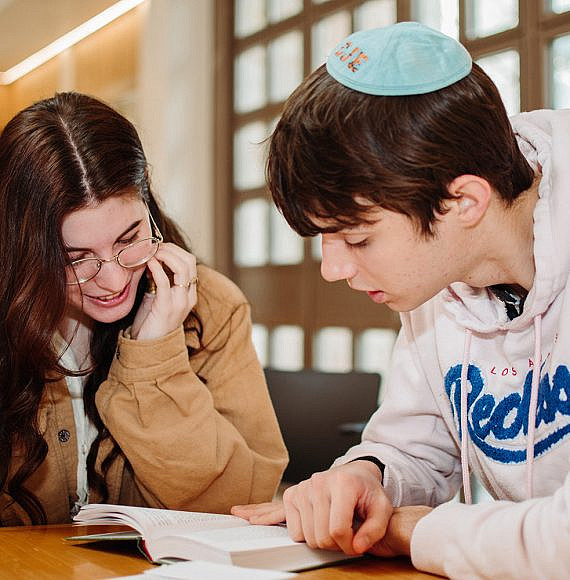
On Hevruta, the encounter is the point. Students learn in hevruta (partnership) spending the year studying texts with people whose Jewish lives look completely different from their own. This learning becomes a door: an invitation into another person’s world, and a way of discovering more about their own.
Learning together in the beit midrash (Jewish study space) is the heart of Hevruta, but the program goes far beyond the classroom. Students travel the country, volunteer and intern in Jerusalem’s civil society, learn how to live independently, and shape the life of the cohort together
The Hevruta community is pluralistic by design and built by the students themselves. Students shape trips around the country, community projects, nights out in Jerusalem, and the atmosphere of Shabbat. Students leave with a deeper relationship to Jewish text, a clearer understanding of life in Israel, and lifelong friendships with Israeli and North American peers.
Participants study Jewish texts alongside modern Jewish thought and philosophy, and spend the year on the questions the Hartman Institute has been working through for decades: how values can shape charged conversations, what holds a people together, what democracy asks of us, what Israel is and what it might become, and what is our role as North American . Classes are largely taught by Hartman faculty.
Both, and we don’t think that’s a contradiction. Study is text-based and critical. You’ll be expected to challenge what you read and each other. What makes it work is who’s in the room: a group of students with very different relationships to Judaism, living together in Jerusalem, reading the same page, and committed to the conversation.
Yes. Students choose elective tracks based on what they want more of, whether that’s Israeli politics, ethics and society, or traditional text study. Students who want to go further into Talmud than the core program can join the Yeshiva Track for more intensive Talmud study.
No grades. There are occasional readings and written reflections, but the year isn’t built around assignments. What we ask for is that you show up and engage seriously in the classroom.
Our classes are seminars: small, discussion-driven, and built around showing up ready to engage, the same thing you’ll be expected to do in college.
The other half of the preparation is less academic. Students run their own apartments, manage a food budget, and figure out how to live with people who don’t think like them. Most arrive at university having already done a version of the first year of adjusting to independent living.
Like many other parts of the program, our ritual life is developed by student-led committees and figuring out how to pray together in a way that honors the diverse needs of the group is one of the most challenging aspects of our pluralistic program. When we spend Shabbat together on campus, we usually do find ways to pray together on Friday night and split up among the many prayer communities on Shabbat mornings.
All apartments are kosher and all programming on Shabbat and holidays is appropriate for traditional Shabbat and chag (holiday) .
People ask us questions like this from both directions. Pluralism at Hartman doesn’t mean politely ignoring difference. It means your relationship to Judaism and Jewish practice is something the group takes seriously and will ask you about. Most students find that more interesting than uncomfortable and bringing your authentic approach will add to the group experience and culture.
Some of them. We alternate between “in Shabbatot,” when the whole group is together, and “out Shabbatot,” when students choose where to go. North American participants often spend those weekends with the families of their Israeli peers, with relatives, or travelling. The “in Shabbatot” are planned by the students themselves, so they look different depending on who’s running them.
While every Hevruta student will have the opportunity to learn Talmud, we provide different levels and amounts based on background and interest. For those who are passionate about rigorous Talmud study, we have a Yeshiva Track. In the Yeshiva Track, students take additional Talmud classes which give them the opportunity to delve into one tractate in both hevruta study (independent partner learning) as well as an engaging shiur (faculty-led class discussion).
In shared apartments in a building in central Jerusalem that the program rents and oversees. Apartments are grouped by gender.
Madrichim/ot (counselors) live in apartments in the same building, and other staff live nearby. The balance we’re after is this: students make their own decisions about their days, their habits, and their budgets, and there’s always an adult two floors down if something comes up.
Lunch is provided at the Hartman campus, and Shabbat meals are provided on “in Shabbatot.” The rest of the time students receive a stipend, shop, and cook together in their apartments. Staff help with the budgeting, which for many students is the first time they’ve had to do it.
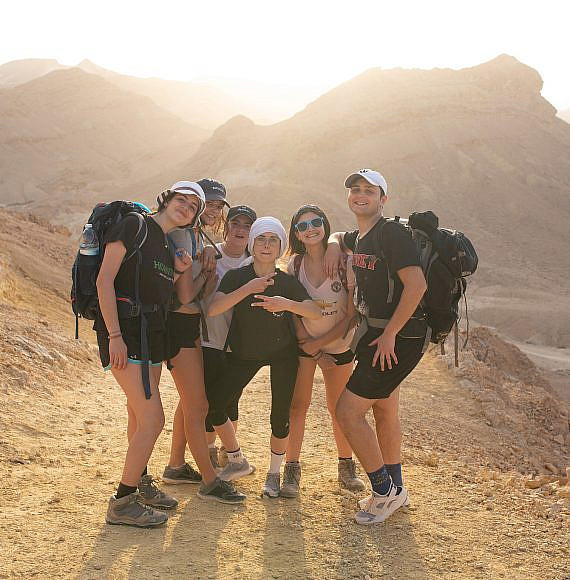
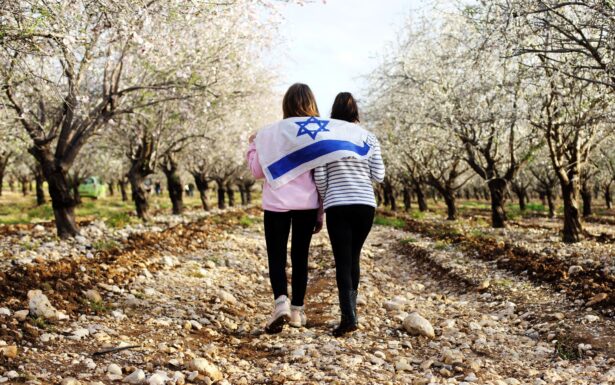
Throughout the year there are a number of trips around the country which include: hikes, city tours, multi-day seminars, and encounters with communities that students would otherwise never meet.
Regional tours in the north and the south, a desert journey, a seminar on conflict and narrative, and group Shabbatonim and retreats.
On free weekends and during breaks, with prior approval and within our safety guidelines.
In 2027, we will begin on September 1 and end early June (exact date to be decided).
Yes. We’re off for the major holidays, and there is a winter during the final week of December and a spring break around and during Passover.
North American students are welcome to, and many do. Others stay, and there’s a reason for that. Breaks are when students travel the country independently or spend unstructured time with Israeli friends, which is often where the year’s closest friendships get made.
Tuition is $39,000. That covers housing, meals, all programming, trips and staff support.
Yes. We know gap year programs are expensive and Hevruta is grateful to be able to offer limited need-based .
Students should plan for additional costs related to personal spending, travel outside the program, and health insurance (see below).
Every student is insured for the full duration of the program. We work with an outside agency that handles the intake and places each student with an Israeli insurance provider, so it isn’t something families need to arrange themselves. The cost is billed separately from tuition.
Staff help students make medical appointments and get to them, because navigating a medical system in a foreign country can be tricky. We also have a social worker on staff, available weekly for scheduled meetings, who works with students directly and makes referrals to outside specialists when that’s the right step.
A new podcast that puts today's biggest Jewish questions in the hands of the leaders of tomorrow.
Dec 14, 2023
May 3, 2024
Hevruta alum Madeline Kohn writes about celebrating Passover while watching protests unfurl across American campuses for The Daily Pennsylvania.
May 2, 2024
Protests erupted at Columbia University over Israel divestment calls. Jewish students express discomfort amid arrests and chants, recalling past trauma. Campus tension intensifies.
Director of the Hevruta Gap Year Program
Director of Hevruta Mechina Program
Director of Teen and Educational Initiatives
Manager of Teen Community & Engagement
Rabbi of the Hevruta Gap-Year Program
Logistics Coordinator
Hevruta Program Madricha
President, Shalom Hartman Institute
Senior Fellow
Research Fellow
Senior Faculty
Research Fellow
Research Fellow
Beit Midrash for Israeli Rabbis Fellow
Director of the Judaism and State Policy Center
Research Fellow, Educational Director of UJIA and Hevruta Faculty
Hevruta Faculty
Hevruta Faculty
Research Fellow