
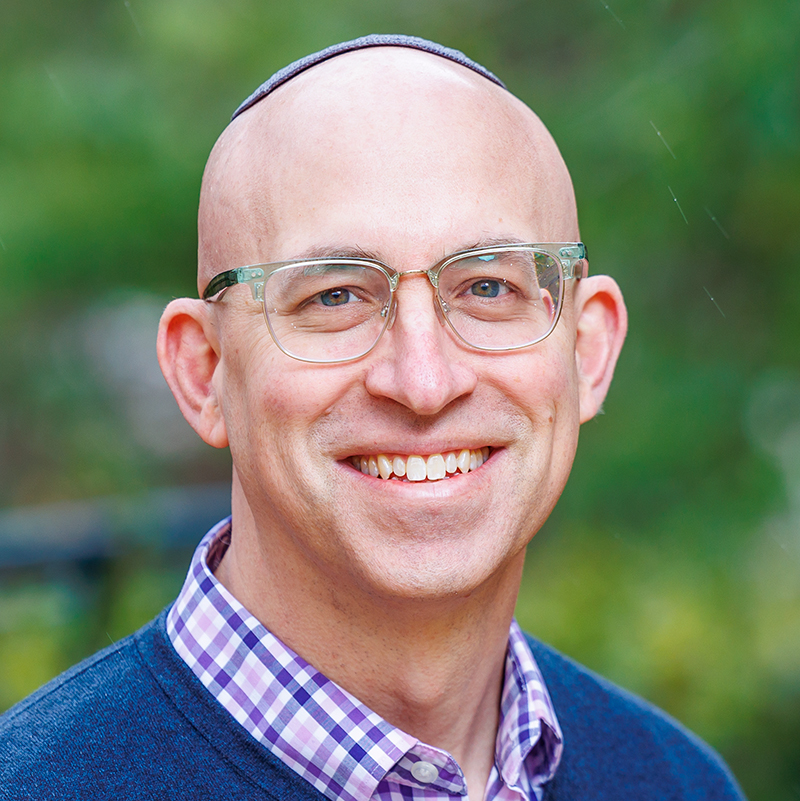
As debates over Israel reshape Jewish communal life, who gets included in the conversation and who gets pushed outside the tent?
Yehuda Kurtzer sits down with John Ruskay, executive vice president emeritus of the UJA-Federation of New York, to discuss Ruskay’s decision to join J Street’s Jewish Communal Advisory Council – a group formed this fall to advance a vision of Israel and the U.S.-Israel relationship rooted in shared Jewish and democratic values. Together, they explore what the council formation reveals about the state of American Jewish institutions, the difference between Israel advocacy and Israel education, and whether communities can remain cohesive amid profound disagreement. At a moment of political polarization and rising anxiety around the future of a democratic Israel, what does Jewish solidarity require?
You can now sponsor an episode of Identity/Crisis. Click HERE to learn more.
A full transcript of this episode is available below.
Listen to this episode wherever you get your podcasts.


Note: This is a lightly edited transcript of a conversation, please excuse any errors.
Yehuda: Hi, everyone. Welcome to Identity/Crisis, a show from the Shalom Hartman Institute, creating better conversations about the essential issues facing Jewish life. I’m Yehuda Kurtzer. We’re recording on Thursday, October 15th, 2026.
Boundaries are one of the main hobbies of American Jews and our institutions. This includes drawing them, violating them, and most especially talking about them. On this, I freely confess that my institution and I are leading hobbyists. We teach and talk about boundaries all the time at the Shalom Hartman Institute. In fact, this very weekend, I’m heading to a massive Shabbat gathering of our over four hundred Hartman teen fellows, and one of the sessions for all the students is about boundaries in Jewish life.
Now, the intellectual reason for this is clear for us. We, our institution, cares about Jewish community, and all self-respecting communities have boundaries, institutions too.
Now, I prefer that we talk first about what it means to belong to a community, and especially what the community’s values are, which make boundaries self-evident, rather than starting the conversation on boundaries, which can make communities lazy. They then don’t talk about what they believe in, they just talk about who is in and who is out.
But either way, talking about community is always gonna require some discussion of who we mean to include and who we’ll need to exclude as a result. And the same conclusion is true when we have a commitment, as our institution does, to talk about pluralism.
I think pluralism is one of Jewish tradition’s most radical ideas, the idea that each human is invested in infinite truth and that God’s truth is apportioned among us. And I believe that the North American Jewish community’s advancement of pluralism as a norm, which represented blending those old Jewish ideas with liberal American sensibilities, is a huge badge of honor, something we believe in and something we want to advance.
But the result of a commitment to pluralism is the need at some point to ensure that that commitment doesn’t become an embrace of relativism. So we talk about boundaries because while we believe that truth can come from any source, we still wanna live in communities where truth makes sense. We still wanna live in communities that keep us safe. You can’t really have one without the other. There are a lot of folks who resent how ubiquitous the conversation is about boundaries in Jewish life, and I share with them the frustration. Sometimes talking about boundaries can replace the work of talking about commitments.
I think some of the reason for that frustration from a lot of folks is that sometimes talking about boundaries also is a conversation adjoined to policing those very boundaries. It’s painful to feel boundaries drawn that exclude you.
As it is today, plenty of Jews feel excluded from Jewish communities and communal structures based on invisible boundaries that communities implicitly enforce but never fully stipulate. This is therefore kind of a dangerous conversation for a lot of people.
Sometimes it’s a dangerous conversation for the Jewish community as well because when you are so fixated with boundaries and you draw your boundaries too tightly around any community, you will slowly shrink that community. You know, there aren’t that many of us. And while periodically there may be moments for circling the wagons, if you make a habit of it, you’re gonna quickly feel yourself awfully lonely.
The truth is, though, it’s precisely the gifts of the North American Jewish experience that regularly invite us back to this conversation. At other times in Jewish history, political and social boundaries were enforced on us against our will, or at other times, Jewish communities built enclaves to create natural boundaries between them and others. Inside Jewish life, there was always plenty of diversity.
I remember reading about the ideological and political diversity of the shtetl. It’s, like, mind-blowing. But at least one of the questions, us or them, was resolved between Jews and non-Jews. But America and Canada and some other European experiences broke down these walls and gave so many of us the freedom of choice in defining our identity.
In turn, it creates chaos in being able to define the parameters of Jewish community and even Judaism itself. It should be no wonder that Jewish leaders want to talk about boundaries. We’re trying to find some measure of order in the middle of this chaos.
Sometimes I think that perhaps the essential idea behind Jewish ethics and practice is the simple statement, “This not that.” It defines what we eat, how we talk, how we mark time, how we behave. And boundaries are a further extension of that same impulse. To have a “we,” we have to know who the “we” includes and excludes.
For a while, near the end of the twentieth century, the dominant version of who is “we” focused on Jewish identity, or more accurately, Jewish status. That was a distinction taught to me by my friend, your friend, our friend, the late David Ellenson.
Identity is what you think of yourself. Status is how identity is construed in the eyes of others and in systems. Our modern era, North American Jews through intermarriage, for Israelis through state involvement in determining Jewishness for the purpose of immigration, forced new consideration on how Jewish communities can apportion status. And sometimes we’ve had to do so in ways that don’t match how Jews think about themselves.
o we’ve been living through this period in which sometimes that has caused immense pain to individuals thinking that they’re Jewish and discovering that they’re not Jewish in the eyes of others. And sometimes we’ve actually gained incredible breakthroughs in this rethinking of status and identity, new possibilities that are created even in the process of boundary-making.
But for the last number of years, we shifted our collective conversation from boundaries of identity to boundaries as relates to Israel. This is now at a fever pitch. In concrete terms, relating to the question, daily question of which institutions belong in the metaphorical and maybe inaccurate metaphor of the big tent, which we’ll talk about, and even to the point now of what attitudes on Israel can be defined to the extreme of being antisemitic, worthy not just of censure, disagreement, but of expulsion.
I don’t think I have to say more about this. Many of you listeners are experiencing this turmoil in your own homes. Future historians will look back at the spring of 2014 as the key moment in the story when J Street, the self-defined “pro-Israel, pro-peace” lobby organization, was denied membership in the Conference of Presidents of Major Jewish Organizations. I got a lot to say about that whole saga. I took strong stance against that decision then. I think that was proven right. I think we’ve seen the downstream effects of that decision until today.
But these tensions have obviously risen to a different fury in the three years since October 7th, where it seems now that the more likely outcome of these debates about boundaries will be combat between different incumbents in Jewish life rather than some prospect of collective resolution.
Maybe as a coda to that story, but definitely the prompt for today. A month or so ago, it was reported that a number of key figures in what is called Jewish establishment life had agreed to join in the forming of a new senior advisory circle for J Street.
Chief among them, for my interests, is my guest today, Dr. John Ruskay, longtime senior executive at UJA Federation in New York until 2014. Pretty much that exact moment when this all went down, presaging this exact moment. I was fascinated by the change in temperature that would lead John, a person who I revere for his leadership for the Jewish community, immense gratitude to John and for his integrity and his wisdom.
I think you were onto a lot of trends in Jewish life well before others were. But I was intrigued by what would motivate you to join this circle, and I want you to talk it out.
Today’s episode sounds like it’s about Israel, but it’s not. It’s actually about us, about what it means at the end of the day for us to have any notion of an us, a Jewish community. What happens to all of us when the flaps of the big tent have to move around, shift open in different places, and change as a result. So first of all, thanks for coming on Identity/Crisis today.
John: Delighted to be here, Yehuda.
Yehuda: Yeah. So I guess I’ll start with this. What, if anything, changed for you about that decision to join the J Street advisory? And obviously, our episode is not talking about the internal dynamics of a different Jewish organization. That’s less interesting. But you made a decision to lend your voice and your name, which travels within a kind of certain circle of what was thought of as the Jewish community, to this bold new initiative of what J Street is trying to do. I’m curious if anything changed for you that motivated that decision to step on that ledge and what the response has been.
John: What initiated it for me and some others was hearing That J Street was actually having difficulty having access to a range of national Hillel gatherings, including many local campus-based Hillels.
And a number of us said to myself at this point, “Wow, this is nuts. We need J Street on campuses. We need J Street at the national level as well. We need it in our conversations, in our debates to try to figure out how to navigate this moment.”
Let me step back for a minute. Delusionally or not, I consider myself a Jewish educator. My primary interest in this matter is how do we maintain and do everything we can to maximize the likelihood of a flourishing Jewish future? And for me, that requires room and space for people to open up, debate, discuss, and consider where they are in relationship to many things, but in this case, in terms of Israel.
In other words… By the way, apropos of boundaries, strikes me for most in Jewish life at the moment, you can say anything you want and believe anything you want about God, on Torah, on mitzvah. Some sub-communities have boundaries, but basically all who wanna join us, whatever their views on these matters are.
But it is interesting in and of itself, and will be, that the boundary issue is right here. For decades, I’ve taught a class in various settings, which is called Pre-State Visions. And I bring pre-state visions. I bring texts from Jabotinsky, Magnes, and Ben-Gurion because pre-state, as you know better than I, you weren’t just a Zionist. You actually had to think about what was your view about what this future entity should be, and on three different issues, they differed economics, socialist, capitalist, religion, secular, religious, and even Jewish state binational.
And this created a very rich, contentious debate within the Jewish community, within the Zionist movement, and the basis for a multi-party system, first in the Yishuv and later in Israel. I actually think that was extremely helpful.
Now, after ’48, attacked, we mobilized, gathered around, wanted to support this amazing young state that was as embattled. But from my perspective, regrettably, that ideological differentiation and debate ended for the most part. I’ve written… You may have seen it. I’ve written that I think the conflation of Israel advocacy and Israel education has been a great disservice to American Jewry.
Israel advocacy we need. I define that as broadly mobilizing the Jewish community to stand with the people of Israel as they resist violence and in their pursuit of peace.
Jewish education, Israel education, I define as helping young and old develop their own views, conflicting views, about what Israel can be, should be, might be.
And in a certain way, identifying at this point with J Street, which I’ve had almost nothing to do with. But how do we get this conversation going? How do we get Israel education, ironically? I’ve written about it. It’s not had the traction that I would have hoped. Because you need to be prepared for some messiness, for real different views, and we need to honor that.
So the notion for me, per what you said in the introduction, that first of all, J Street was chutz lamachaneh, outside the camp back in 2014, still is. But more urgently now not being gained access in college campuses and others. I don’t mean the organization. That view, they define themselves as pro-Israel, pro-democracy, pro-peace. Chutz lamachaneh? So my notion was could a few of us associate and say—and our statement was clear. Many of us aren’t that knowledgeable about everything J Street’s been doing. Some of us have disagreed on some of their strategies and tactics, but the notion we wanted to see how the kind of keep at a distance, whether it’s federations, most liberal synagogues, Reform, Conservative, Reconstructionist, Federations, it is time for them to be part, that view to be part of the debate and discussion so people can feel there’s a place for me.
I mean, we are witnessing a flight from Israel in a certain kind of way. Forget outside the Jewish community, within the Jewish community, that is exceedingly painful. And it strikes me by providing the opportunity for a J Street and that view to be more present, to try to encourage it, to try to enable it, that can help people to feel, “I have a place in there. I can identify. I don’t have to be standing only with and supporting only with the present policies of the government of Israel.” That’s how I I got into it.
Yehuda: So first of all, a lot of things you said are literally my love language, you know that. And you said, “I wish more people had read or engaged with the notion of a distinction between Jewish education and Jewish advocacy.” You spoke about this at UJ Federation in 2009.
It was, like, at the beginning of your tenure. We started Hartman North America in 2010, and that was our mandate. So to the extent that people didn’t necessarily read that you put that idea out there, we internalized it, and a big piece of why we do what we do is to differentiate between we’re not really a Jewish and Israel advocacy organization, right?
John: Right. You’re an educational institution.
Yehuda: We’re an educational institution. That means that, like, many of our scholars have very strong opinions that would codify them as, like, being Israel advocates, but when you step into a classroom, you step into a classroom, and you make possible genuine disagreement and difference, and you interrogate your own assumptions. So whether or not it got attributed to you, it has a beating heart inside of our work, and we’re very proud of that.
You said a lot of things, and I wanna unpack pieces of them, but the reason why this feels like a big deal is because while you and I as thinkers and educators can differentiate very clearly between those as two different agenda items for our community, we’re also in the middle of an advocacy war, right?
Where advocacy organizations are at war with each other. J Street has been very, very openly critical for years about AIPAC, AIPAC in reverse about J Street. You know, Donniel wrote a piece years ago where he was like, “Guys, just figure it out and get along,” and that never happened. And there is a perception, I think, that AIPAC is on the defensive because of the decision they made to change their strategy, directly endorse candidates, the consequences of January 6th on their public identity, and that J Street is on the rise, not just with their ideas, but actually taking up territory.
So by joining in with J Street, you’re participating as a result in a territorial war, not on the education side, but the advocacy side. Does that concern you at all? Does it interest you at all? Or do you think that we’re, like, losing the plot on this story?
John: I would respond to this in the following way. Both J Street and AIPAC legitimately think they are pro-Israel. There are different views about what that means to be, quote, pro-Israel. I don’t think that’s a great term that’s going on. And we need to include them in our debates, discussions, and considerations.
I’ve never been part of J Street, and in a certain kind of way, as part of a Jewish communal advisory, I don’t exactly, but I’m obviously, I am a liberal Zionist. I’m sympathetic to the general perspectives, although I’ve stayed away from Washington and having anything to do with that. B
ut my interest here is providing more room in the community for debate, study, so to strengthen their own. In that article that I published way back, I said, “I think Israel education will be effective when more people can hold the dega or the flag, whether it’s at that point, Shalom Achshav or,” and I wrote it, “of Gush Emunim or whatever.” In other words, I’m actually agnostic. I think this is in part about Jewish engagement. I have my own views, but as an educator, I want to provide soil and context for people to be able to think differently, debate, discuss, understand, because I actually believe it will strengthen commitment. I think we are now harvesting the consequence of only investing in Israel advocacy.
You know, after I gave that talk, which you generally thank you for citing, it was actually the 10th anniversary of my having been named CEO. So many groups came ’cause we did provide real money for new efforts in this area. Many people came and basically said, “We’re already doing it.” I said, “I’d love to see what you’re doing. Send it over, the curriculum, et cetera.” In my opinion, it was basically Israel advocacy, how to let people more effectively respond to the critics, be more effective advocates.
So the question of what is Israel education, in a certain way, despite the extraordinary work that Shalom Hartman, that you folks have done, is still not embraced by most organizations and most institutions. And my hope would be, which, I don’t wanna overstate the importance of creating an advisory, a communal professional of people that have served. My hope can be that that can help nudge and encourage more openness to diversity and thinking deeply about what it means to engage young and old. This is not just for young. We’ve got this problem throughout the community right now of people being incapable of dealing with the complexity of the moment.
Yehuda: Yeah. I think that if we can kind of analyze a little bit what the hostility is right now in our community around any version of opening up on Israel, I think it basically is a Maslow’s hierarchy of needs problem. I think the idea is that I will talk openly and around issues that really deeply implicate me when I don’t feel that I’m endangered.
But when you’re in a place that people feel endangered, they perceive open spaces as a site of danger as opposed to a site of possibility. You could see it like—I feel it differently in my throat since October 7th, right?
John: Say more.
Yehuda: Like, my anxiety about, are we gonna get this right? Are we gonna get it wrong? Are we gonna hold people in in the right ways? Is Israel gonna win this way out of this, both militarily and morally, which are not the same wars? In fact, in some ways they’re the opposite wars. That closes down the possibility of what you’re advancing, which is almost indisputable.
Of course, Israel should be a topic that engages more of us and engages our whole hearts and our whole minds. But there’s a lot of people who feel like, no, now’s the time to enlist people in a very narrow and particular war because we’re scared. We’re scared of the anti-Zionists. We’re scared of their political empowerment in New York. We’re scared of the global ramifications of this. We’re scared of Israel’s neighbors, and therefore now is the time to focus on advocacy towards a particular effort. How do you as an educator engage with that kind of threat language that’s coming from what’s motivating really the advocacy move?
John: Well, first of all, I think it’s a very interesting point, my experience in this, because this has been a interest of mine for 60 years. As I think you may know, I was one of the people that it was an initiator of Breira.
Yehuda: Oh, yeah, I have tons of questions about that, but go ahead. Yeah.
John: So it’s never the right time. It’s never the right time. It’s never the right time because we live, and I’m gonna say, understandably, with the substantial fear. We are post-Shoah still, and even though that was not my direct or most of my family’s experience, the fear and the hostile neighborhood we’re in, and multiple assaults on Israel, so we’re very scared. And by the way, that makes it very difficult, in my view, for us to do the kind of thing that might have led to a different place at the moment.
But I wanna come back to what I think is making it so painful. On the one hand, I think large segments of American Jewry and beyond, there are a set of issues here. This is, after for the last fifteen years, we’ve seen at least a decade, if not more, of Israeli governments that have not made the pretense of pursuing peace, continued settlement issue, settler violence, what is viewed widely as the overreaction to 10/7. The Israeli narrative, which has now engaged America. America made the decision to engage in the Iran war.
All of these issues have led to what is leading to, in some ways, doubt and flight and what’s going on. I think for a substantial amount of American Jewish leadership, as our dear friend Jonathan Woocher zichrono levracha wrote, Israel was at the core of their Jewish identity, and it was for some idealized. This is really painful. And in moments of pain, you wanna hold. You wanna contract, you wanna stay. So this is a really confusing, and we’re just at the beginning.
See, I believe the paradigm that provided the extraordinary framework for American Jewry post ’67, as Woocher summarized in Sacred Survival, is collapsing. A new paradigm is yet to emerge. It’s a really complicated, difficult period.
And it’s particularly most difficult, which brings me back to for the centrist institutions in the Jewish community, which are seeking to hold the largest spectrum of the community. And that’s why I thought actually in trying to help J Street get into the mix here with AIPAC. I’m not saying AIPAC shouldn’t be in there. We should—whether organizationally, representatives, their views, they all belong in there to have rich discussion and hopefully help people not say, develop their own views on these matters, which I believe will strengthen it.
So I wanna keep coming back. It’s never been the right time. Just never been the right time.
Yehuda: Yeah. You know, it’s interesting. I, I hope perspective on some of these issues changed when early on in my tenure here, we kind of took a position as an organization that we would pretty much go wherever we were invited to speak, and that the integrity was you would say the same thing in both places.
And there was one year where I had a keynote role at J Street, and I had a prominent role at AIPAC, and I actually gave the same talk.
John: Kol HaKavod. Kol HaKavod.
Yehuda: And the best part was when I actually looked into the crowd of the laypeople, they were the same. They were demographically the same, denominationally the same. They were pretty close in the Venn diagram of what they believed, maybe a little bit more nudge on the American pressure side. I don’t know if that’s true today in APAC 2026 and J Street 2026, but it definitely was the case in 2014, and that’s why I felt that the whole story was kind of a scandal.
Because even though there were real policy differences between them, they were basically playing in the same market of what we call the troubled committed, people who are part of the Jewish community, want to be activated and agitated around Israel, and push differently on their public officials on this.
But they really were part of the same thing. I’m very compelled by the notion of it’s never the right time. I think, by the way, you’re describing like the need for liberal courage and willingness to say, actually, the project of bigger tents has to happen precisely in moments of safety and security.
I want to note though, you were also out on the record a couple years ago, I think it was ’24, on saying that American Jewish establishment institutions were being too silent on democracy questions. You want to say another word about the—domestic democracy questions. And that also spoke to my heart. I feel like that’s a huge missing piece of what’s happened here, and I pushed Ted Deutch about it on this podcast.
What do you think is going wrong in these systems, in our establishment organizations that is making them less courageous than they might need to be on the kind of moral agenda of democracy here and democracy in Israel?
John: I referred to the paradigm, Johnny Woocher, et cetera. That civil religion had a number of components. And one of them was I would characterize as sort of post-FDR liberalism. A deep commitment to the role of government and an expanded government protecting civil rights, civil liberties, developing programs and reaching out to the poor, the elderly, the homeless, et cetera. that began to splinter and weaken beginning in the ’80s.
Commentary Magazine became one of the places that really took on welfare, affirmative action, et cetera. Remember, American Jewish Committee signed on to the legal challenges to affirmative action. When people keep talking—where were our allies post 10/7? And I sometimes think do we spend too much time thinking about Dr. King and Professor Heschel marching together? I had relationships with both of them, but that doesn’t mean that our allies thought we were with them all the time in these battles.
Yehuda: Yeah, for sure.
John Ruskay: So the commitment to a, what I’ll call post-FDR liberalism, it wasn’t 19… It was later, began to shred, and particularly at the donor class. Not in my opinion for Amcha, not if you take a look at the way Jews vote, but among the major donors, and not only major donors, I’m not laying this. The major donors who are deeply engaged in Jewish life to their credit.
And therefore, I think that for many institutions made it very difficult after 2016 and even after 2020 to deal with many of the outrages that were taking place and assaults on democratic institutions which we are now further experiencing.
So yes, I was part of a group that sought to encourage, and in by the way, they’re actually similar. They’re both trying to create more room for Jewish leadership to think seriously about what they can do on both fronts. That was the purpose.
And just this week, by the way, I happened to talk to a national Jewish group that was asked to speak to th- their board, and the CEO introduced and said, “Thank you for creating more room.” That was my purpose. That was our purpose. That was my involvement in both of these, to create more room on both. Not sure we’ve made much progress on both of then but some I think we have.
Yehuda: No, what we’re describing right now feels like to me a five to 10-year project at minimum, where I think we’re gonna continue to see regression in organized Jewish life until some boomerang effect. But the boomerang effect will only happen through very significant organizing. Not statements, but organizing.
John: I wanna just offer one other take. You talked about dysfunction and the difficulty of organized Jewish life. I know there’s a sense of darkness and pessimism about Jewish life, but I just wanna say in my own view, and it could be wrong, I think Jewish life in many ways at the local community level is flourishing.
Yehuda: Mm-hmm. I agree
John: That just to take synagogues, I grew up in a conservative synagogue. Conservative, Reform, Reconstruction, et cetera, maybe Modern Orthodox as well, far more participatory than it was when I was growing up. When I was growing up, my synagogue, a wonderful synagogue, was a spectator sport. It’s a different matter because of the success in part of Jewish day schools, of summer camps, of Israel trips, et cetera.
So when I see the independent minyanim, shuls, summer camps packed, day schools, et cetera, I’m not saying we don’t face issues, but I think at that level. So when we talk about the challenges, in my view, this is primarily of the, quote, “organized national organizations” and leadership up there, but it’s not all dark down there. That doesn’t mean people—
Yehuda: Oh, I agree. I, I totally agree, and I would say actually the lived experience of Jews in congregations… We know a lot, especially here at Hartman, about, you know, the death by Israel sermon, and the rabbis fear they’re gonna get it wrong in one direction or the other.
But we also hear plenty of stories of rabbis who are actually holding together difference among American Jews. And by the way, it’s even a novelty right now among fellow Americans that they have purple congregations as opposed to red and blue, that they have congregants who are in J Street and have congregants in APAC.
So the interesting question is whether some of the better models for how our institutions could lead could come bottom up as opposed to right now top down. There is a kind of a self-perpetuating culture at the top, which thinks in more stark terms than I think human beings think in.
John: Well, I think that’s a very interesting point because just actually earlier today, a colleague who’s a member of J Street called me and wanted to talk. He says, “How do you think we could move forward to help JCCs, synagogues, et cetera?” And he, in this case, offered, “Would it be useful for a small group of us to identify a few local institutions which could help model this?”
Yehuda: Yeah. You know, there was an interesting story that I just saw yesterday. It was a poll about New York voters, which suggested that New York Jewish voters statewide are actually shifting in dramatic ways in the lead up to the midterm, shifting from the Democratic Party. I have questions about the methodology, as always, as—
John: How dramatic was it?
Yehuda: Something like a shift to, like, 40% of Jews are gonna vote Republican. That’s a big number.
John: From 25 or—
Yehuda: From 25 … or 26.
John: That’s huge.
Yehuda: That’s meaningful enough. You know, I don’t know whether it’s enduring. I don’t know what actually happens at the ballot.
John: This is, this is a governor’s race, right?
Yehuda: Yeah. So that’s what makes it a kind of interesting story. It would be wholly unsurprising in the city of New York. You know, like him or not, people have various opinions about Mamdani, good for the Jews, bad for the Jews, irrelevant for the Jews. All of that is there.
I think that’s actually a more interesting discussion than the one we are currently having about Mamdani, but it wouldn’t surprise me in New York City. But it is surprising statewide because it means the decision for somebody to switch their political party Is the decision to say, “My values are no longer expressed there.”
And that would mean that you’re seeing a kind of journey in Jewish values. I’m curious whether you see that happening, especially at that kind of class of leadership in which you tend to operate, where again, there’s some gap between that leadership class and the Amcha.
John: I don’t know. I think elections like this, and I think we’re talking about the gubernatorial, often a very important thing is what people call what is a candidate quality.
And I think the governor, who I think has done a pretty okay job but is not viewed by many as strong, let’s acknowledge that her opponent is a Jew. How that plays in this—it’s hard to know. I think it’s a little hard to put this all together. Future political scientists or sociologists will work on studying, A, if it happened and what the results are, and B, what the motivations were.
Yehuda: It’s one of these watch this space closely.
John Ruskay: That’s fair.
Yehuda: So let me go back in time a little bit in this conversation and actually in history. And you know, I have a weird notion of what I think would make for a great Netflix series, which is why I’m not a TV producer. Like for instance, I think you could run two seasons on the JTS faculty in the ’60s.
John: The JTS faculty?
Yehuda: Yeah. Right. That’d be a blast. Nobody talked to each other. All of these luminaries of Jewish life, and nobody was talking to each other. But similarly—
John: You know, I was there.
Yehuda: You were there, yeah.
John: I went to rabbinical school for a year.
Yehuda: Oh, it must have been a blast.
John: Well, first of all, I had a great year. I had been with Dr. King in Alabama briefly so when they came in, at that point you had a full scholarship. So you were then a secretary for a faculty member, so they assigned me to Heschel. So I had the privilege of being Professor Heschel’s secretary for a year.
I do remember getting on the elevators at JTS, I’ll just say, and on that was Lieberman, Professor Lieberman or Finkelstein or whatever, and you just hope you could get off the elevator.
Yehuda: Right. So, yeah.
John: It was an amazing time.
Yehuda: I would watch 10 episodes on that. But anyway, the—
John: Select, narrow audience.
Yehuda: A narrow audience. But the more interesting one is actually the Breira story, which you alluded to before. This is a footnote in American Jewish history that very few people know about. My guess is that some of our listeners will know about it and some not.
But the short version of the story was a very powerful, organized movement, I think initiated by Rabbi Arnold Jacob Wolf, and maybe you’ll tell me the full story, but he’s associated with it in a whole bunch of ways, really trying to mobilize a different conversation, a, a more left conversation in the Jewish community about peace, about the prospects of peace.
Ultimately, the group got enormous amount of response because of its advocacy for meeting with the PLO, which ultimately it did. Wolf and Everett Gendler, I believe, were kicked out of the Rabbinical Assembly, at least temporarily, for that decision to do so. They were condemned. The organization was roundly condemned by a number of establishment Jewish organizations. You know the script. It’s been—
John: Mostly the far right.
Yehuda: Mostly on the right, but I think ADL was in the mix at the time. Maybe I’m wrong about that. Maybe AJC. Of like, that they were engaging with terror organizations, considered antisemitic. Stuff that if it happened today would be identical in terms of the playbook.
And then, like two weird things happened. Breira goes away in 1978, and within 20 years, you, one of the leaders of Breira, is running UJA Federation of New York. So can you fill in that story? ‘Cause I think it’s like really interesting in the present to notice these questions surfacing and then to actually have a, a past case study that might help us think about it.
John: Well, actually—
Yehuda: Well, I’m sure I got things wrong, so
John: Well, you’re not, not far. We recruited Arnold Wolf. We were graduate school students at Columbia.
John: Well, in candor, I was a key initiator of Brera. I had taken a class in Middle East politics in 1966 and 1967, which changed my life. Ultimately, I have a PhD in Middle East politics. Was a classmate with your dad. And so the first article I ever wrote was called “Conflicting Mythologies in the Middle East.” Which we obviously now would call conflicting narratives in the Middle East. Which was based on a teach-in after the ’73—at Columbia Law School, after the ’73 war. Another presenter was Edward Said.
So it basically argued, you need to understand both perspectives. And having studied a lot about political science in the Third World, I came to the view all occupations produce resistance. So identified with those in Israel and the few voices here who said, “We need to think about getting out of here.”
And I, as a deeply engaged, I was involved in creating the New York Havurah in 1969. So I’ve been involved in creating organizations in the Jewish community for a long time, became deeply involved in this, and thought it was time to have a Jewish institution because there was no Jewish institution, which led us to want to create Breira.
Golda said, “Ein Breira,” so we created Breira. We got a whole group of rabbis, very influential rabbis, Rabbis Joachim Prinz, Robert Gordis, and others to endorse it, editorial support from The New York Times, and then there was a vicious attack from an organization that’s still there, Americans for Safe Israel, which identified a number of people who, because of their past, because in ’69 or ’70, there was no Jewish group, so I became a little bit close to something called the Committee on New Alternatives in the Middle East, which was a predecessor to Breira, but it wasn’t Jewish.
And I came to the view with a few others, we needed a Jewish group for this. We needed to do this within the community. Not a whole lot different. And we needed to open it up. We needed to open up the conversations about Palestinians. It also was about opening up the conversation on diaspora Israel, Ashkenaz, Sephard, et cetera. This all came from Ahavat Yisrael, from a love of Israel.
I mean, I first go to Israel in 1963, fall in love with the place, come back as a staff member for USY Pilgrimage in 1965. I’m in love with the place, take a class in the Middle East, and realize it’s not black and white. There’s gray. And that was like, whoa. And that stayed with me.
So in a certain kind of way, now you ask the question how, because I was constantly, I hope, conveying the deepest connection to Israel. Israel is an amazing place. Still, I’m going in two weeks. The place is amazing, and yet I’m in deep pain about where we are for all the reasons that you have expressed in numerous settings as well, and still holding on to a little cautious optimism. We’ll see. Things can change.
Yehuda: Why did Breira go out of business?
John: Well, because bottom line, the attack on us… I don’t remember all the detail, but the attack on us and the funders actually with—a number of the funders withdrew, and we were kids, you know. We had other things to do, but so it went.
Yehuda: By the way, it’s just an incredible story, and I apologize for making it out that it wasn’t a student group. It was, quote-unquote, “adult-led,” and, I like that story obviously a lot better.
Do you feel there’s any lessons from that episode? Is it—or is this just one of these history doesn’t repeat itself but it rhymes kind of stories?
John: Well, I’ll tell you, you’re asking a very interesting question. Earlier this week, I was involved in a film being made, I think, by the family of Professor Steven P. Cohen, who you may have crossed paths with. He was a person who, he was not a diplomat, but he was the first person that made contacts between Israelis, Palestinians, Egyptians, et cetera. He was a unique guy. Regrettably, he has died.
Yehuda: I went to his shiva, yeah.
John: You know his family.
Yehuda: Yeah, for sure.
John: Amazing family. I went to ask him to sign to the initial statement on Breira. Out to Kennedy Airport, he was flying to Israel for some reason. I went to ask him to sign, and he said, “I agree with the statement, but I don’t think anybody’s gonna be able to hear it.”
Now, for two or three years people heard it, but in the end, the fears, the attacks were destabilizing, the funders left, et cetera.
So the question of what people can hear, and your point about what the present moment is, and the fear people have, understandable fear. I think they have external fear, post 10/7, clearly a resurgence of anti-Semitism in ways we did not anticipate, the abandonment, the flight from Israel, and couple that with the impact that’s having on many Jewish leaderships, their own identity, which was so heavily based on Israel.
I love Israel, but truth be said, my Jewish identity is not based there.
Yehuda: It’s secure.
John Ruskay: What? It’s, it’s based on Torah and Shabbos and the things I care about. I mean, I was not raised in this. I end up at a Jewish summer camp, changed my life. Why? Retrospectively, I was experiencing kedusha on Shabbos. I says, “Whoa, this is a different way to be on this planet.”
And everything I’ve basically done professionally, wherever it was, was to try to make it possible for more people to experience the unique way in which Judaism can enhance one’s appreciation of life and experience of life, and Jewish wisdom.
Israel I’m involved with because Am Israel. They’re us. We’re them.
Yehuda: The movements today that are anti-occupation in nature, that’s what IfNotNow calls itself, an anti-occupation organization. Jewish Voice for Peace more comfortably calls itself an anti-Israel organization, so it’s not like if you call them that you’re insulting them, you know? But a lot of these movements are also student-led.
Do you see a difference between the motivations that you experienced with your peers in Breira in the ’70s versus these expressions today, or do you think that the Jewish community needs to be more sympathetic to young people who are coming out with deeply trenchant criticisms that they argue are actually coming from their Jewish commitments also?
John: I don’t, I don’t know. I mean, I’m not sure enough, and you’re probably closer to them in studying them or being in touch with them than I am. I don’t know. I mean, one of the, for me, unintended obviously consequences of 60 years of occupation is people learning about the Israel-Palestine conflict in ways that was not the case in the ’60s, ’70s, ’80s, and now they’re learning about Zionism.
In that article I wrote, which you’ve generously cited, I say, “Most of us are liberal nationalists, equality über alles.” The Zionism that prevailed per Herzberg since we’re here at Columbia, is a conservative nationalism. It preferences Jews. And what I wrote in that article is you can work your way through that, but you can’t work your way through that by ignoring it.
And hence the—what’s happening for Jews, I’m not talking about the external places that are coming, which has to do with American foreign policy and all sorts of issues.
Among Jews is another painful indictment of our lack of, you know, what was the expression in so many studies? They never told us. I still believe… I mean, when I wrote that article, someone said, a dear colleague, Dr. Alisa Kurshan, you may know, said to me, “How do you know the people on the other side of this are gonna come out and be able to maintain themselves both as Jews and their connection with Israel?”
I said, “We better assume that when everything’s on the table, the debate is open, the debate floor is open, they deal with all the issues, identified Jews will still recognize the legitimacy for the Jewish people to have a Jewish homeland and Jewish sovereignty in our ancient homeland.” I have that confidence still. For a lot of reasons, which we could discuss if you want, and there were mistakes on both sides all over the place.
Yehuda: Yeah. I mean, what you’re expressing is the optimism of an educator, which is if we actually do this correctly, if, by the way, we assume less malice, I would love to see this as an agenda in Jewish life. So and so holds to this viewpoint. You know, I have peers in the sector who call them un-Jews, who write them off, who say they misunderstand everything. Well, maybe.
But, like, if your job is to relate to people as an educator, you can’t start on the assumption that they’re operating from a place of malice. You might say, this is still paternalistic, they’re operating from a place of ignorance. But if so, then that creates an even bigger burden on you—And the, and the opportunity as educators.
I see the continuity, and I feel it very deeply, that somebody could go from Breira as a graduate student to running UJA-Federation of New York. It’s not that you changed, and it’s not that you sold out. It’s that you saw that those were both ex—dignified expressions of what it meant to be both passionate about the Jewish people and passionate about pursuing the agenda of what we’re supposed to do in the world. I’m really worried that those are becoming completely opposing pathways in the world.
John: I think your concern is well-founded. I went to UJA Federation to work on the issue of Jewish education. I went there in 1993. Became CEO in 1999 for 14 years as CEO. It was during Oslo. Vision talk shortly after assuming the CEO ship I said, “We’re on the cusp of being post-Israel at risk.” Got that one wrong. So it was really a different time.
Throughout the 14 years as CEO and always, I spoke deeply about Israel education. I mobilized the community. I mean, we had all sorts of Intifada One, Intifada Two. Not Intifada One, but Intifada Two, et cetera. Spoke always about Israel as a Jewish democratic state and the need to get there, which became actually increasingly problematic near the end in 2014 when it wasn’t so easy to make that claim.
So, you know, I went there to deal with the issue of Jewish education. I was very moved by the human services of the federation, and deeply moved by the connection to the Jewish people throughout the world. Some of my proudest stuff are what we did in the former Soviet Union then with Jewish summer camps and Jewish education and birthright, et cetera, and helping bring them…
So this was a global platform to be able to impact the Jewish world and maintain my commitment, which is still with me, to Israel as a Jewish democratic state. It’s not gonna be in my lifetime. Sadly I say this.
But I’m still committed and hope I’m still involved in trying to plant seeds for that possibility. You don’t exactly know which those seeds are… What will lead to Israel-Palestinian reconciliation peace down the road. I’m on the board of Encounter. Maybe that’ll help. I hope this move here will help open up space which will help the Jewish community be ready in some future.
So at this stage of my life, I mean, I’ve been involved with this now for 60 years. We’re in a very painful moment. I didn’t expect it when I became CEO. I thought we were on the cusp of a whole new world, and the fact that that opportunity was blown, didn’t happen, multiple causes for that, multiple books on that, et cetera, but nothing weighs on me heavier right now than where we are.
Yehuda: Yeah. I think that’s a powerful place to stop. I really appreciate you being here. Thank you for your wisdom.
John: Thanks. Great to be with you.
