Sifre Devarim (Deuteronomy) 34
Otzar Midrashim, Midrash Petirat Moshe (The Death of Moses)
Sefer Petirat Moshe Rabbenu Alav Hashalom (The Book of the Death of Moses), Jerusalem, 1897
Sifre Devarim (Deuteronomy) 34

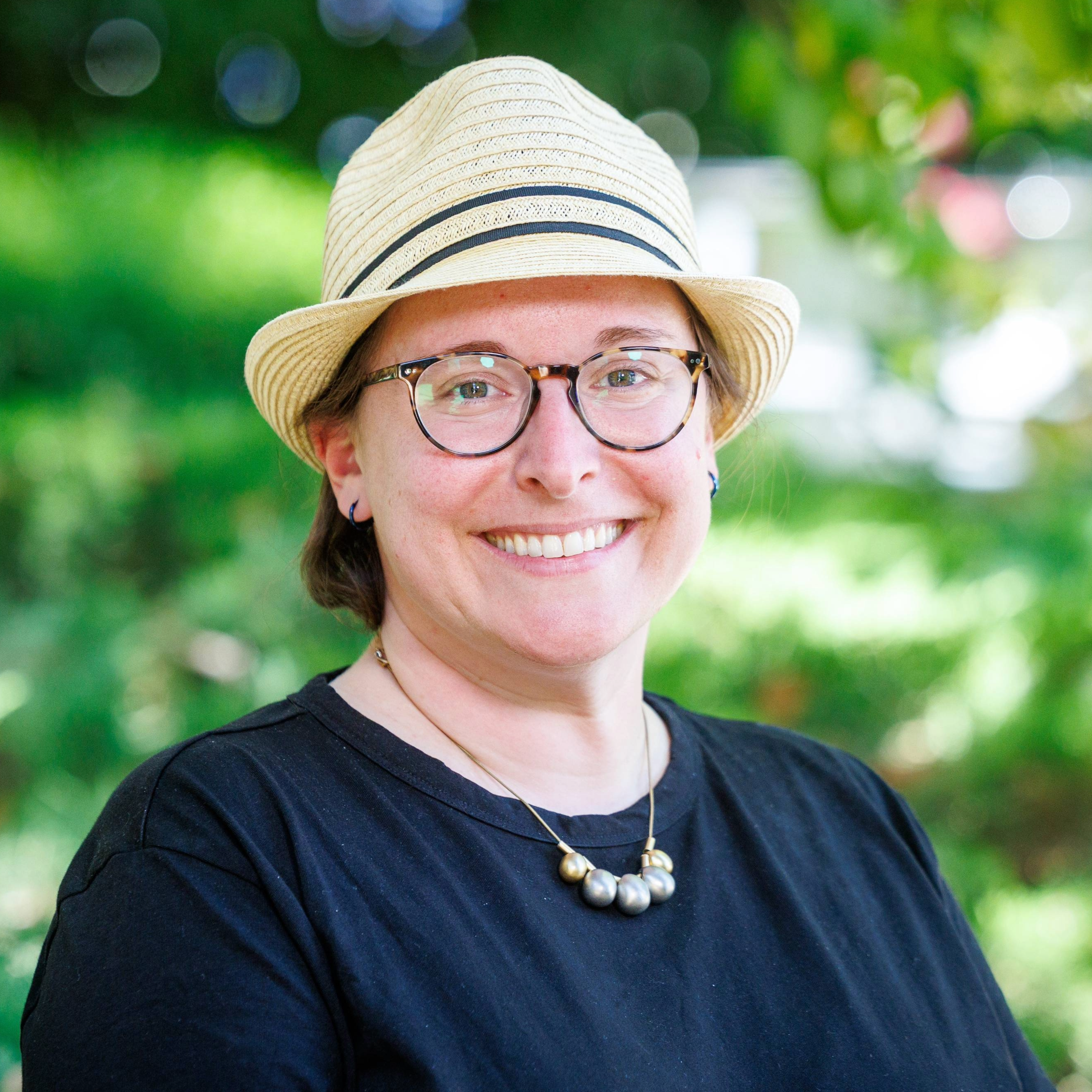
What does it mean to love Israel deeply while choosing to build your life elsewhere?
In this episode of TEXTing IRL, Elana Stein Hain and her husband, Columbia/Barnard Hillel Campus’ Rabbi Yonah Hain, get personal and reflect on their family’s two years living in Israel, their decision to return to New York, and the competing demands of family, career, Jewish identity, and Zionism. Drawing on Parashat Vaetchanan, the Shema’s commandment to teach our children, and rabbinic teachings about Moses’ longing to enter the Land of Israel, they explore the fulfillment of the self and the challenge of making life-changing decisions in uncertain times.
Sifre Devarim (Deuteronomy) 34
Otzar Midrashim, Midrash Petirat Moshe (The Death of Moses)
Sefer Petirat Moshe Rabbenu Alav Hashalom (The Book of the Death of Moses), Jerusalem, 1897
Sifre Devarim (Deuteronomy) 34
A full transcript of this episode is available below.
Subscribe to TEXTing IRL on its new YouTube channel and on all major platforms.



JOIN OUR EMAIL LIST FOR MORE HARTMAN IDEAS
You can now sponsor an episode of TEXTing IRL. Click HERE to learn more.
Loving and Leaving: A Zionism of Longing Transcript
Note: This is a lightly edited transcript of a conversation, please excuse any errors.
Elana: Hello, everyone. Welcome back to TEXTing IRL: Ideas for Real Life, where we wrestle with the big dilemmas of our time through the lens of classical and modern Torah texts. I’m your host, Elana Stein Hain, and we’re recording on July 6th, 2026.
Today we’re bringing you a very personal episode about life transitions and family decision making. My family and I have been blessed to live in Israel for the past two years, as you’ve heard me discuss on this show many, many times. I’ve loved bringing you insights from my time here. In just a few weeks, we’re moving back to New York, and in this episode, I want to share what it’s meant to be here in Israel and what it means to decide to move back to New York at this time.
We were here for so many big milestones that will make it into the annals of Jewish history. The opening day of school in 2024, when we were notified that the group of hostages known as the Beautiful Six, had been killed. The end of 2025, when the final hostages returned home. Four rounds of war with Iran, the feeling of Israel becoming more and more isolated in the world, the incredible bravery of Israeli families and their soldiers, the frustration of so many of the Israeli people with where their country is headed, and so much more.
But through all that, we were also here having our personal experiences, adjusting to school and work in a different language and culture, and spending time with family and friends, stepping out of our regularly scheduled program to change our routine.
In addition, as I wrap up my time in Israel, we’re wrapping up this season of TEXTing. I’m really grateful to all of you for listening every other week to our Torah study with such inspiring and thoughtful guests. I know you didn’t agree with everything you heard, but I didn’t agree with everything either, and that was kind of the point. I’m so grateful to my colleagues in Israel and in the US who supported me in this project, in both vision and execution. Even as this season wraps up, I will still be writing and teaching. Be sure to subscribe to Hartman’s emails and YouTube channel to continue learning with me, and stay tuned for more opportunities for us to learn together, online and in person. Back to our episode.
In this week’s Torah portion, Ve-etchanan, it is confirmed with finality that Moshe will not enter the Land of Israel. For this personal reflection on my family’s time in Israel and transition back to the US, I’ve invited my husband, my life partner, and ongoing guest from the first season of TEXTing, way back when, Rabbi Yonah Hain.
Yonah is the university rabbi at Columbia-Barnard Hillel and is currently writing his doctorate in rabbinics. Welcome, Yonah.
Yonah: Thank you for having me, Elana.
Elana: Yeah, well, you know, we’ve talked so much about Israeli society on this program. I actually, we should just start by talking about our personal experience, like how this has felt different than our regularly scheduled program, getting to live here for two years.
Yonah: So for me, it’s been pretty drastic because I’m on a study leave sabbatical. So whereas in the States, I have commitments for work on weeknights, on weekends, Shabbatot are pretty booked, here, I’m a researcher and writer, and I have been able to really emphasize family. I’ve had countless memorable, unforgettable, and just quality moments with you and our kiddos, and Ve-etchanan is an excellent window into sort of contrasting what life is like in America for us or for me, what life has been like here.
So the verse in question, we’re going to do a verse and then two rabbinic comments on it. So the verse comes from the Shema, which is in our Torah portion of Ve-etchanan, and charges us with ve-shinantam levanecha, you shall teach diligently your children, and thinking about being able to transmit anything to our children means effort, time and availability.
Elana: Always.
Yonah: I think anybody with a demanding job, even if it doesn’t have weeknights and weekends, you’re always struggling with the balance between family and your professional life. But to be able to say unequivocally that these two years, I was able to pause and prioritize them, carpools, the dinners, I haven’t missed any events.
Elana: Yeah, that’s pretty great. That’s actually pretty great, considering sometimes we would eat by ourselves on Friday night at home, because you had to be at what I call the four-hour kiddush, at shul, at night, at university.
I also want to say, I think there is something to taking kids out of their usual institutions. And the family actually really is the institution when you go to a new place. And that also, meaning it’s not even just time. It’s also just what exactly is holding everybody in. Family is actually what’s holding everybody in, which is pretty, pretty amazing.
Yonah: Yeah, we haven’t outsourced these two years, very much. That’s the first blessing.
Elana: Okay. So you’re saying personally the parenting, the family that.
Yonah: Yeah. My parental self, my cup has been overflowing.
Elana: That’s beautiful. That’s very nice. And I’m—
Not sure that I want to diminish it.
Elana: Well, if our kids did this podcast, I wonder if they would be like, they’re just spending, like, a little too much time with us. Like, if it was just like a little tone it down kind of thing. Okay, so we’ve got parenting.
Yonah: Ve-shinantam levanecha.
Elana: Ve-shinantam levanecha, that’s beautiful. And there’s a lot about children in, like, there. You know, children are our future, as we say.
Yonah: You should trademark that.
Elana: I know, I know. But can we get a little bit because like, I know, I know the, in addition to the children, let’s go to like our personal because I feel being in Israel even personally just there is definitely an immersion that I have felt a Jewish immersion, a growth immersion. And some of that I think is just from moving out of my usual repertoire. And some of that is just Israel itself. So let’s, let’s talk about that, because ve-shinantam levanecha, the levanecha, to your children, is not the only word in that phrase.
Yonah: Absolutely. So beyond embracing my role as a parent, my days here in Israel are dedicated to this doctoral research, and my research is in one of my ultimate passions and love. It’s in rabbinic literature. It’s in Chazal, it’s in the rabbis. It’s in gaining depth in our tradition and understanding it. So to be immersed in Torah study, thinking, writing, truly luxuriating, is, it’s just something I, I cherish.
And it’s encapsulated in a rabbinic comment on, ve-shinantam levanecha, you shall teach your children, because the verb chosen is ve-shinantem. And we may be familiar with that phrase, to learn and to study, like Mishnah, shinantem.
Elana: And to repeat.
Yonah: Yeah, sure. Another iteration of study and knowledge. But scholars point out that actually what ve-shinantem means is to incise, right? And perhaps like, the most accurate translation would be, teach incisively, right?
Elana: There’s like sharp—
Yonah: There’s a sharpness. So the rabbis say that if you are tasked with bestowing a knowledge that impresses, that is incisive. You yourself need a sharpness with your knowledge.
Ve-shinantam levanecha, the Sifrei in Devarim says, she-yihiyu mechudadim betoch picha, k’she’adam shoalcha davar lo tehei megamem bo, elah tehei omro lo miyad. If someone asks you something, it should be sharp and familiar and on the tip of your tongue. So in order to impress something upon someone else, it needs to be clear and full of depth for yourself.
And that really represents how these two years have been all about an inner growth and my personal self to be able to grow in exposure, experience and expertise in my doctoral work.
Elana: But part of that sounds like you could have done that in Uganda just to bring up a hypothetical, but doing it in Israel.
Yonah: Well, I’m doing a degree in rabbinic literature.
Elana: Yeah.
Yonah: Some of the world experts, most of them live here.
Elana: Literally most of them.
Yonah: And most of them hang out at the National Library, where I hang out every day.
Elana: Yes, yes.
Yonah: Including the fellowship that I’m a part of. Professor Vered Noam runs it. Lunch, I overhear things that help my dissertation
Elana: Right, cause I, meaning, I, right. Meaning, I kind of feel like being able to be here. I get sharper in my Jewish thinking. Just A) just Hebrew, like, literally just hearing Hebrew and hearing certain terms and phrases that come up. I get sharper in my Jewish knowledge, and that actually allows me to read Jewish texts better. Like, actually, I think there’s something to true about that. There’s such a culture of learning, and I think that makes a huge difference.
Yonah: But for you, there’s a spirituality in the immersion.
Elana: Correct.
Yonah: I sometimes joke you would not mind spending the rest of your week just learning about the people for whom streets are named in Jerusalem.
Elana: Are you kidding? I stop and I read them like it’s my first time here. You know, I think that’s true. I think there’s there’s just it’s just really it’s really immersive. I mean, a friend of mine put it this way, and I’ve been repeating this to so many people that living Israel feels like living in the deep end of the pool. And so that depth and that immersion Jewish is real. And sometimes you feel like you’re going to drown.
Because to be honest, as I’m sitting here enjoying the depth, I’m also watching a lot of people around me who are not actually filling their cup the way that I’m able to fill my cup but are pouring out their cup, meaning they’re sacrificing a lot. They’re kind of at their wits end. They’ve had a really hard time, and I feel that sometimes there’s a dissonance between those things, because I’m an insider-outsider. Meaning insider, of course—I try to do what I can and volunteer and do things if I can help, but it’s… I definitely feel that I have the luxury to be in the personal in a way that feels like I’m growing from it, as opposed to in a way that feels like I’m sacrificing for it. It’s very different. I mean, it’s, this is unique, I feel.
Yonah: The different reactions Israeli Jews offer us when they hear we’re going back, some are, look at it as, oh, it’s so amazing that you’re so committed to your family living here and it being not just a place where you visit or vacation.
Elana: Meaning, the fact that we came here at all. Yeah.
Yonah: And then others are like, well, what, you’ve been here. I don’t get it. Don’t you get it? The whole point be here. Stay
Elana: Right. But do you think some of that is also—
Yonah: What right do you have?
Elana: Or just stay and accept some of those difficulties. Meaning—
Yonah: But I’ve heard you teach many, many times about how often, you know, Israeli Jewish society can be viewed as something predicated on obligations and American Jewish society being predicated upon rights.
Elana: Oh, totally, meaning, it’s so different. I mean, it’s such a different mindset.
Yonah: So do you feel guilty?
Elana: I mean, I, I don’t know if it’s guilty… Yeah. Let’s go with guilty. Yeah, I actually, I actually do. Meaning, I feel, I feel like I’m very fortunate to have been here. And look, again, four Iran wars. It’s not like, you know, those guys are shooting to kill. We’re not you know, we, we didn’t have any cocoon through those things. We were with them and everybody else.
But other people have so much more that they are giving. And that is something that I’m going to take with me from this experience of just how difficult it is to be able to appreciate what people are going through and, by the way, what their moral considerations are—
Yonah: Absolutely.
Elana: Because we have such different ways of thinking about things.
Yonah: I was asking a lot of my Israeli friends during the Iran war, so what do you want from your diasporic Jewish friends?
Elana: Right. Like, what do you want from us?
Yonah: Not us. We’re in between.
Elana: Right, right, right. We get to be the—
Yonah: I’m not, we’re not them, but we’re also not us. So what do you want from your American Jewish family or diasporic Jews? Do you want them to constantly check in? Are you okay? I saw—do you want them to share? Oh, by the way, we’re going to the theater tonight because they’re continuing their lives. Even the best Zionist, even the most.
Elana: Your friends said they would want somebody to talk about how they’re continuing their regular life.
Yonah: A lot of people will say, we have family members who say, I am not interested in your text of Ts and Ps—
Elana: What’s the Ts for? Thoughts?
Yonah: Thoughts and prayers.
Elana: Thoughts and prayers. Thank you. No, I think it’s very hard.
Yonah: You have to live your life. There’s always been a diaspora. Be diasporic. We’re here. We got to be together.
Elana: So let’s go back to guilt, because there isn’t enough of that. I actually want to share midrash that I’ve been thinking about for a while, and it goes like this. Okay. This is Moshe. He knows he’s not going into the land, and he is desperate to go into the land. And this resonates with me. I’ll be honest. And this isn’t about guilt. It’s actually about love. And it’s about longing.
It says Amad Moshe batefillah lifnei Hakadosh Baruch Hu. Moses stood in prayer before God. Amar lefanav, said, before God, Ribbono shel Olam, sovereign of the universe, im mipnei Yehoshua talmidi ani met, if the only reason I’m going to die and not going to the land is because you want my student Joshua to lead, ve-atah doche oti ki hu ya’avod lifnei ha’am hazeh, and you’re pushing me away. Because he’s going to be the one to lead. Let’s strike a deal. Yaavor hu lefanav k’Rav, he can be the leader, ve-ani acharav k’talmid, I’ll just be his student. Just let me go in. Hu k’Kohen Gadol, he can be like the high priest, ve-ani HaKohen hedyot, and I’ll be like a regular priest. Hu k’melech, he can be like the monarch, ve-ani k’eved, I can go in as a servant. Right? Physically, I’ll give up my leadership.
Now, by the way, this is so familiar. So many people moved to Israel from a different country, and that’s what they need to do. They actually have to give up a little bit of their leadership. I mean, even these two years here, you know, don’t get me wrong, like I speak here and there and then but there’s no question about the ability, the capacity to lead—it’s not zero, but it’s way more limited. But that is a price that I’d be willing to pay, because I’m sort of like the… the privilege of living in our homeland, and the country’s problems, trying to deal with them as the problems of the Jewish people. And how do we deal with that? I’d be willing to give up some of that. And I think that’s I just think it’s powerful, that sense both that people experience, that lack of ability to lead and that there are people who are saying, I’m willing to do that.
Yonah: It’s been a conversation, recurring conversation with our kids. In what areas do they feel comfortable being their full selves, perhaps even taking on a leadership role? Let’s say… We don’t have to out any children, but I was talking to a kid who’s lived here for two years. I’m not going to say who.
Elana: Yeah, some kid
Yonah: May or may not be ours, who was one of the heads of the minyan at his school back at his school, and I asked, have you ever led services? Have you ever been chazan? No way.
Elana: Right.
Yonah: The Hebrew, exposure–
Elana: The accent. The accent. You need to get the accent right. Even though I’m, like, Golda Meir had an American accent.
Yonah: Of course.
Elana: And she did plenty for the country.
But, yes, that sense of being able to lead, it’s real. No, no, no. That’s real. So it’s interesting. Moses’ desperation gets more intense. And he goes for my favorite. He goes for some loopholes and he says, okay, okay, okay.
You said I can’t go over the Jordan even as the, the servant. So here’s what I’m going to do. Why don’t you let me be a bird and I will be able to fly over the Jordan? And there it doesn’t seem like he’s going to stay in the land, but he at least wants to see the land, right? He wants to get in there. And this, I think is fascinating.
It’s like, by hook or by crook and even total transformation, I will be a completely different animal. Just let me be there. And that I think we’re already in like a, we’re in a moral question. We’re in a moral question like, what do you sacrifice to be in a place?
And the next part of the Midrash and we’ll put, you know, actually, we’ll put the whole midrash in the show notes, because it goes further into this. Even he says, I’d be happy to be a dag, I’d be happy to be a fish. And I’ll go under, meaning if you won’t let me fly over, God said, you can’t fly over. He says, I’ll go under, I’ll go through the depths. And by the way, the best is—and this was so perfect for our episode together. God says to him, no, going under is like you cross the Jordan. It’s the same thing. And by the way, the depths are reserved for Jonah. For Jonah, that’s who gets to go in the depths, right? You don’t get to go in the depth.
So I actually want to talk about this for a minute because it’s, it’s like there’s a Zionism at all costs. Like the pragmatic and the ideological, how people balance those things, because it really isn’t easy if you have a real sense of love and ideology and passion.
And by the way, it’s not even just ideology versus pragmatism. It might be one family member’s experience versus another family member’s experience.
Yonah: Moshe is demonstrating here a version of Zionism that says—
Elana: I love that, he’s demonstrating Zionism. Canaanism?
Yonah: Sure. Yes, to use that in contemporary life, it’s a form of Zionism at all costs, living here at all costs, meaning whatever my career or whatever, my family station, whatever my parents are up to, whatever.
Elana: Right, depending on your age and where you are.
Yonah: The need to be there. Need to be there.
Elana: Yeah, yeah.
Yonah: And I respect that a lot.
Elana: What would you say is the alternative to that? Right. We’re sitting here as people who are going back to New York. What would you say is the alternative to that, at all costs?
Yonah: There are obviously extremes, right? Where it’s not nearly as it’s not a value that ranks as high, but it can also be a value that ranks nearly as high, but not at all costs.
Elana: Right, right. It’s interesting because I think—
Yonah: My professional life, my family life, my X, Y, and Z is also a consideration in where I live. And the definition of Zionism is not limited. Zionists are not only the ones living here.
Elana: So this is interesting because I think, you know, we live in a time, both—us coming here to begin with, right? Us coming here to begin with. At the very least, what I think, what we were hoping is that our kids should consider this place at home, and not like an abstract home, but like a home, like they know the language, they know the culture, they have friends, they know what it is, they—you know what I mean? They, they, move with its waves.
Yonah: What I would say is that it’s not just a place we visit on vacation. It’s not just a place we come for the bat mitzvah or the wedding of the relative, but it’s a, it’s it’s one of our—
Elana: Right. And the only way we and the only way we could have done that is because I’ve been coming for Hartman every summer, and we’ve been coming with Hartman. Many of our kids have had a month each summer. They’ve had a few weeks each winter. So they’ve known what it’s like to go often, to go often, to go often. And now it’s, okay, immerse yourself. You’re now in the deep end of the pool. You’re now in the deep end of the pool.
But I think we’re in a unique position, that—I don’t want to take for granted that for a lot of Jewish history, if you were going to go into Israel, you were going to go into Israel, and if you weren’t going to go into Israel, you weren’t going to go into Israel.
Yonah: Can I put it differently?
Elana: Yeah.
Yonah: Right. So Moshe is making this plea. If we didn’t have this incredible gift of living in New York City and considering this home and living here as well, would our calculation be quite different?
Elana: Uh, the answer is yes. Our calculation would definitely be different. And I want to bring up the guilt again. I want to bring up the guilt because here we go. We’re going to go back. Oh, that’s so great. So in a few years, if we decide we can come back and that’s so nice and go back and go forth and go back, that is something that I am, I am deeply aware of, much more than I would have been had I not lived here for two years like I’m, I have never lived here for more than a year, I’ve never lived here more than a year.
And I actually just want to say, I feel this pull of this midrash. I really, really do. I feel the pull of where you love something so much, where you believe in it so much, where you want, you’d be willing. I feel it, I think it’s I think that that is, you know, I laugh that like the, the Zionism of my youth, it has paid off. You know what I mean? Like, it is real for me. It is real with all the questions and all the problems and all the dangers, like it is real. And so I love this midrash because it’s, it’s, it says something, it’s from the gut, it’s from the gut.
And I think that’s really important when so many people are trying to tell us right now that we should let Israel go from our guts. And guess what? No. Absolutely not. So I want to end this, though, by going back to I want to end this by going back to Teach Your Children, because it’s not just about teaching your children, right? We said it’s not just about the children, it’s about ve-shinantam levanecha. And now it’s not just about shinantam, it’s about the children. Because the children are not just the children. Right. Let’s talk professional, okay?
We are moving back. I mean, don’t get me wrong, thankfully, I have had a wonderful time professionally here, worked on a book, look out for it, people, it’s called Torah for Democracy. Coming out in a year, God willing. Okay. And I’ve traveled back and forth all around. But I want to talk, especially because you have such a, like, a gap.
Yonah: Such a contrast.
Elana: Such a contrast. Let’s talk professional. Ve-shinantam levanecha. What are we talking about?
Yonah: So I’ve loved my parental self, and I’ve loved my personal growth here. And I’m also looking forward to going back to the Columbia-Barnard community, going back to ve-shinantam levanecha, our verse. And the rabbinic gloss. So the rabbis continue in that Midrash.
The Sifrei: levanecha, to your children, actually, what does that mean? Eilu talmidecha, your children are actually your students, ve-chen atah motzei bechol makom she-hatalmidim kruyim banim, and there are many proof texts to demonstrate that when a verse in the Torah says children, it’s referring to students.
And this can blur lines.
Elana: Yeah, for sure. For sure.
Yonah: You need boundaries. Your students are not your children.
Elana: No no no. Yes yes yes, that’s correct.
Yonah: But there is a responsibility. And for me, the pendulum swinging towards study and family. I want to try to have a good healthy balance going back between my personal self, my family self, parental self, and my professional self.
Elana: Yes. No no no. I agree with you.
Yonah: I’m gonna be committed to students, but I also need to finish my dissertation.
Elana: Yeah! You can do it.
Yonah: Lo and behold it doesn’t write itself.
Elana: It doesn’t write itself. I tried, it doesn’t.
Yonah: And I would love not to miss moments of our children.
Elana: Yeah. No, I do think for me that’s a, that’s a big thing to bring back that I’m basically saying, okay, back in my immersion in American Jewish life with all of the questions we got right now, political polarization, we’ve got anti-Semitism, we’ve got Jewish identity, we’ve got so many things. And we’re going to jump right back in there. But how do I bring a little bit of levanecha, my children and a little bit of the shinun, the importance of actually continuing to sharpen my own, in order to and in balance with those people who I’m going to try to be there for and teach and lead and learn with and learn from, quite frankly, right? How am I going to be able to do all that?
And I, you know, I just think we’re so, so, so fortunate, thank God that we’ve had this time. It’s, I don’t take it for granted.
Yonah: So this says that the children are students, are your students. But I often think that it’s, it’s it could be the same said of your spouse.
Elana: Say, say that a little louder.
Yonah: You’re teaching so many people so often with such an important sense of depth and meaning that I love getting to share that with the Jewish people.
Elana: That’s very sweet. Thank you.
Yonah: And this journey that we’ve been on the the roller coaster, feel like together, it’s… The decisions aren’t even that hard.
Elana: Yeah. No there’s… it’s organic
Yonah: They’re weighty, they’re hefty.
Elana: And they have they have consequences.
Yonah: They’re consequential.
Elana: They have consequences. Yeah.
Yonah: But, it’s just filled with love.
Elana: And made as a family unit, which is great.
Yonah: And so many other ideals.
Elana: Correct. So I’m going to end the episode, host’s privilege, by thanking you for making these two years what they’ve been.
Yonah: Hold for applause.
Elana: When you told me a few years ago that you thought we’d be able to spend a year or two in Israel, I said, I don’t know how you’re going to be able to do that as a campus rabbi. And you did it. Thank you. Changed my life, changed our lives, changed our children’s lives.
Yonah: Well, thanks to Columbia-Barnard Hillel, Brian Cohen, and others.
Elana: Yeah. I would like to thank God, like Baruch Hashem.
Yonah: Baruch Hashem.
Elana: We are so fortunate that we got to spend this time. And I’d really like to thank the shell of Hartman Institute for figuring out a way for me to study more about Israel in Israel, and to be able to go back and forth and be part of both teams. That is not something that is a default or an automatic, and it has simply changed the course of all of our lives. It’s… We are, we have a lot to be thankful for. Too bad this isn’t a Thanksgiving episode.
